Field Essay 02 · Identity
Who Can Vouch for a Person?
Identity is not only information about a person. It is an infrastructure that decides whose account of that person will be accepted.
A person can know exactly who they are and still be unable to enter a system. Access depends on whether the system recognises the evidence, and whether someone with authority is willing to stand behind it.
Identity is a relationship
We often speak about identity as if it were a collection of facts: name, date of birth, nationality, address, employment. Yet a fact becomes useful only when another party accepts it. A passport works because a state stands behind it. A degree works because an institution vouches for the learning it represents. A bank account, employment record or professional reference each carries a different kind of institutional trust.
Identity therefore does more than describe a person. It organises relationships between issuers, holders and verifiers. It determines who may enter, transact, work, travel or receive care.
Proof is never neutral
Every system decides what counts as evidence. One institution may recognise a credential that another ignores. A history accumulated in one country, company or community may lose authority when it crosses into another.
This is why mobility makes identity infrastructure visible. A person moves, but recognition does not necessarily move with them. They may have to produce themselves again through documents, interviews, references, deposits and digital records.
The question is not only whether information is true. It is whose verification is considered legitimate.
More proof can mean less personhood
Digital systems often respond to uncertainty by asking for more. To prove one attribute, a person is required to reveal an entire record. Verification and disclosure become the same act.
But a complete record is not the same as a complete person. More data may improve a system's confidence while reducing the individual's ability to decide which part of themselves is relevant to a particular exchange.
Selective disclosure interested me because it introduced restraint. Prove what matters here, without making everything else available. Privacy in this sense is not disappearance. It is more precise participation.
Who is allowed to vouch?
States, banks, employers, schools and platforms already play this role, but they do not carry equal authority in every context. Communities and personal relationships also recognise forms of identity that formal systems cannot see.
A person may be highly trusted inside one network and illegible outside it. Another may possess excellent documentation while remaining unknown to the people around them. Neither formal proof nor lived recognition is sufficient everywhere.
As identity becomes more digital, we are not only choosing better ways to store credentials. We are deciding which institutions gain the authority to turn a claim about a person into access.
Identity may belong to relationships, not only individuals
The future of identity is often imagined as a better digital passport for one autonomous person. But many lives are organised through dependence and association. A family member may be financially dependable without having an independent credit history. An immigrant's dependant may be trusted within a household while remaining almost invisible to a financial system. If identity infrastructure recognises only individual records, it mistakes the absence of a conventional history for the absence of a credible relationship.
The same problem appears in small business. A one-person company may be legally separate from its founder, yet its capability, reputation and decisions are inseparable from that person. At another scale, two branches of the same organisation may share an institutional identity while operating across borders under different legal records and verification systems.
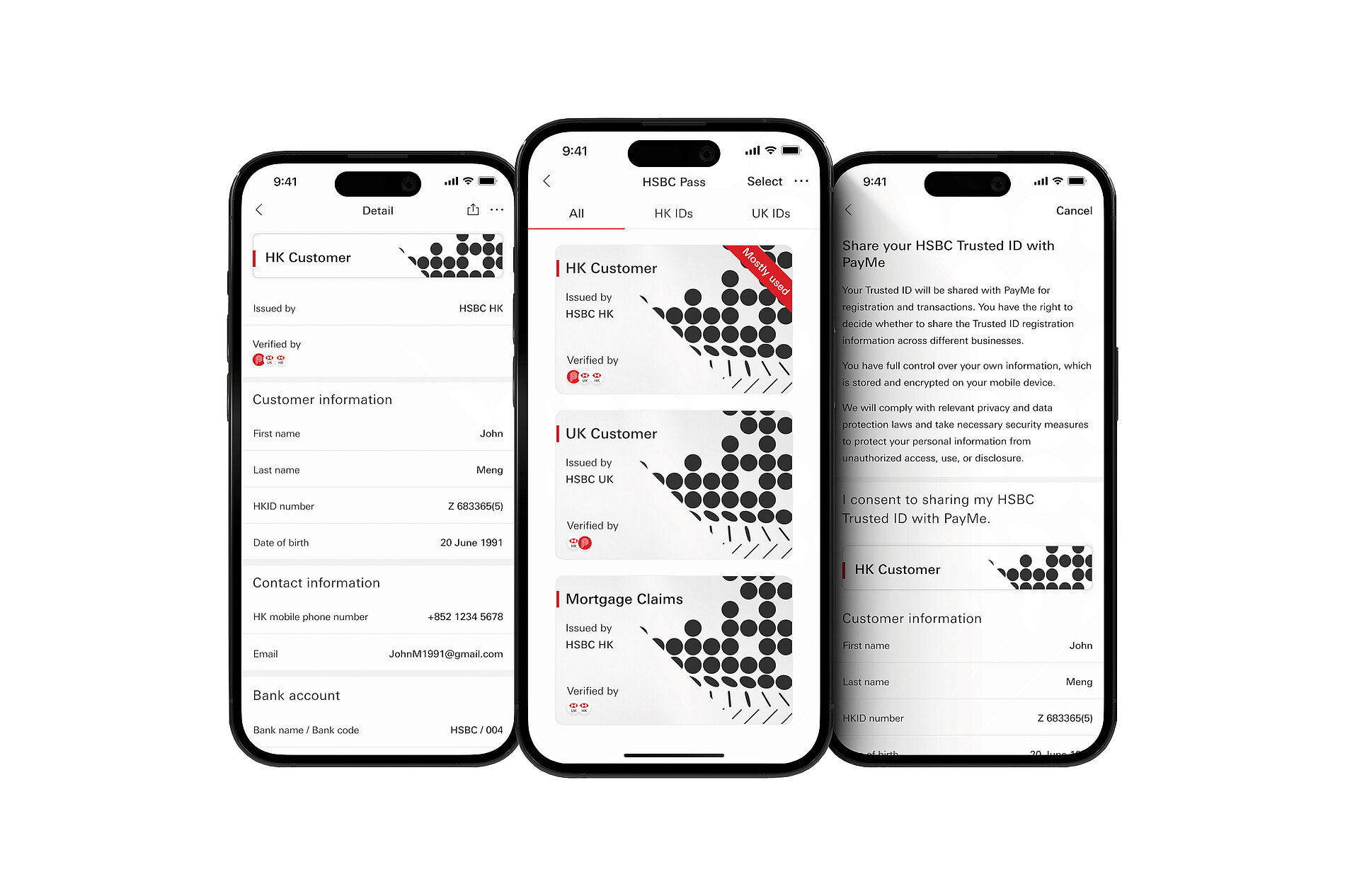
Decentralised identity could help these relationships carry trustworthy claims between systems without forcing every participant into one central profile. A person, household, business or branch could present the relevant connection and authority for a particular exchange. The important possibility is not decentralisation by itself. It is the ability to make relationships portable while keeping their scope visible.
The restraint I want from identity infrastructure
I do not think the goal is one complete identity that travels everywhere. A universal record can easily become a universal surface for judgement.
A better infrastructure would allow trust to move without requiring the whole person to become transparent. It would let different aspects of identity appear in different relationships, while preserving a person's ability to decide what is relevant and what remains their own.
The question I continue to carry is not “How can a system know me completely?” It is: who can vouch for me here, what do they really need to prove, and why should that be enough?