Field Essay 01 · Money · August 2026
What Is Money?
The first step in becoming money-aware is to imagine money again.
Textbooks describe money as a medium of exchange, a unit of account and a store of value. Everyday life is much stranger. Money is luck, permission, obligation, status, safety, temptation and belief. It crosses borders, institutions and generations, but it never arrives empty of meaning.
A project reopened an old question
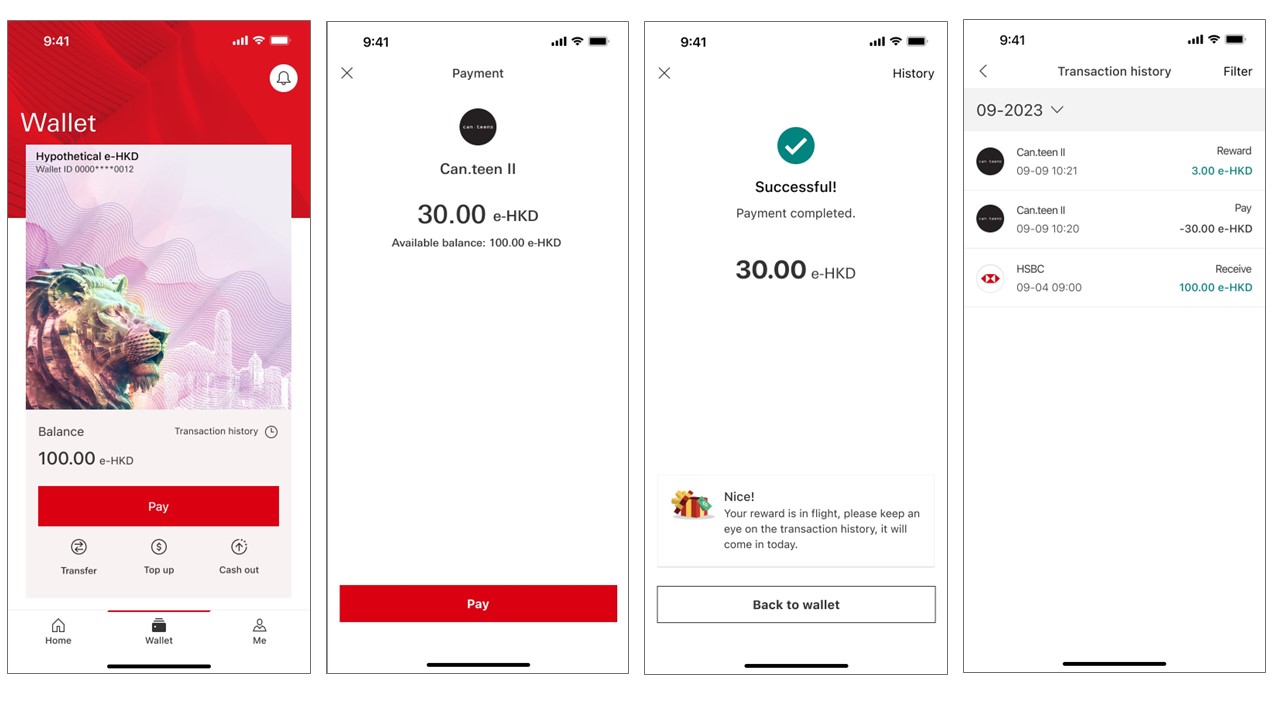
In 2022, I worked as Product Lead on a hypothetical e-HKD pilot with HSBC and the Hong Kong University of Science and Technology. We explored programmability through customer and merchant experiences on a university campus.
While working through what a digital currency might be able to do, I found myself returning to a much older question: what makes money money?
Could money expire? Could it remain anonymous? Could it carry conditions? Could it be accepted by one person but not another? If those properties can be designed, they are no longer only abstract characteristics in an economics textbook. They become choices about how value is allowed to move.
Programmability did not give me an answer about the future of money. It made the question of money visible again.
When does money become something else?
Imagine a government benefit issued to an older person for a specific form of care. Within that purpose, it has real value. Outside it, the value may be unusable, non-transferable or meaningless to someone else. Is it still money, or has it become a voucher, a right or a promise?
Consider a donation whose use is specified in advance. The condition can express care and accountability: this contribution should support food, education or emergency relief. But the condition also limits the recipient's ability to decide where the need is greatest.
If value only becomes active when its conditions are met, where does that value reside? In the amount, in the right to use it, in the institution that honours it, or in the agreement between all of them?
Money carries consensus
A number in a wallet matters because other people, merchants and institutions agree to recognise it. That agreement is not simply technical. It is social, legal, political and cultural.
Programmability makes it possible for more of that agreement to become explicit. A policy maker may want public value to reach care. A donor may want a contribution to reach a stated purpose. A merchant may want to encourage a particular exchange. Each is proposing not only that money should move, but that it should move towards something considered valuable.
This made me think of money as both infrastructure and proposition. It enables circulation, but it also carries an idea about what should be supported, rewarded or prevented.
Flows can be designed
Once conditions can travel with value, the flow of money becomes more deliberately shapeable. That can create useful forms of public support, targeted relief, transparent giving and incentives for actions a community wants to encourage.
It also creates responsibility. A system might try to prevent public support from being spent on gambling, for example. The intention may be protective, but the restriction still contains a judgement about how another person should live. The same mechanism that directs value towards care can also become paternalistic or controlling.
The question is not whether money should flow freely or be governed completely. Money has always been governed. The harder question is how responsibility, agency and collective value can coexist within its movement.

Consensus is also cultural
Agreement about money is never only technical or legal. Culture gives money additional lives: blessing, obligation, luck, merit and a connection between generations. These meanings do not sit outside the monetary system. They influence what people save, exchange, offer, conceal and trust.
My personal encounters with red packets, temple offerings, exchange rates and a charm made from a seed belong to another form of writing. They are not evidence for this argument, but the lived ground from which the question continues to grow.
Money is structure, claim and possibility
Some people accumulate savings. Others can mobilise relationships, credit, knowledge or institutional power. Some build value into property. Others preserve the liquidity to move. The amount a person owns is only one part of their capacity to act.
This is why I no longer want to ask only, “How much money do I have?” I also want to ask: what can the value available to me connect? What possibilities can it open? With whom can I share risk? What kind of world does its movement reinforce?
Future money will remain infrastructure, but it will also remain consensus, culture and a claim about value. The first step is not simply to make, save or programme it. The first step is to imagine again what we are asking money to be.