Concluded · Digital money · Hong Kong, 2022
Programmable e-HKD
Money that can read a condition, not just move value.
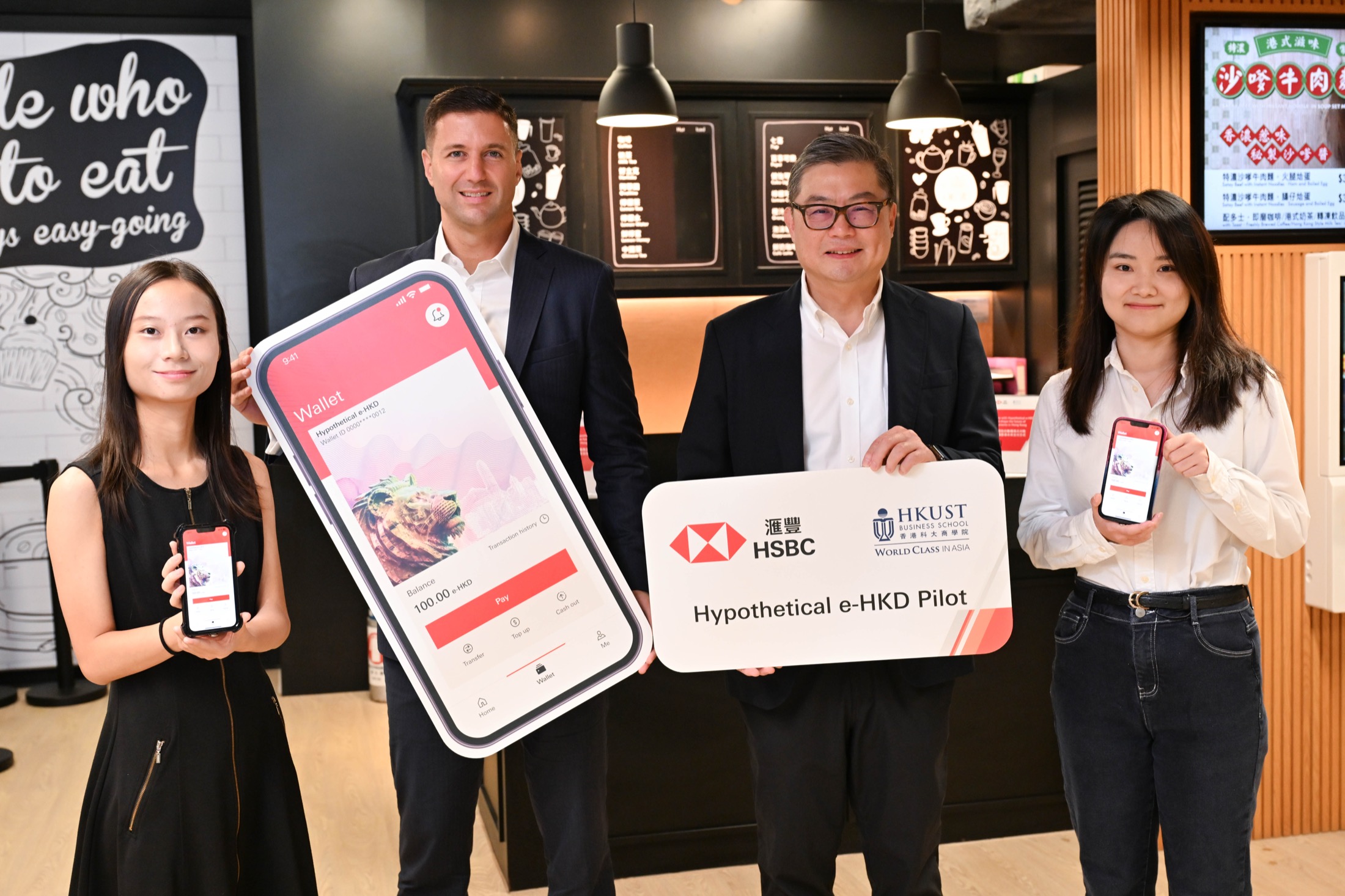
Public pilot evidence
A real wallet used at real campus merchants.
Question carried by the work
When money can execute conditions, who writes the conditions?
Follow this question in Field Notes: Money, conditions and incentives →Technology-led inquiry
The narrative begins with what programmable value can do, then follows how that capability enters a live institutional setting.
- What it was
- A live pilot testing whether e-HKD, Hong Kong's hypothetical retail central bank digital currency, could carry executable conditions, not just move value.
- Why it mattered
- Once money can execute a condition, the design of payment itself starts to shape eligibility, reward and behaviour, not just process a transaction.
- My role
- Product Lead.
- Year, duration, place
- 2022, pilot, Hong Kong (HKUST campus).
- Status
- Concluded.
- Strongest proof point
- 148 participants across 5 campus merchants, a live customer and merchant experience, documented in HSBC's e-HKD Phase 1 pilot factsheet.
Money that can read a condition, not just move value
Most payment pilots test whether money moves faster. This one tested something else: once money can execute a condition, encoded eligibility, timing, reward, does the design of payment itself start to shape behaviour rather than just process it. With HSBC and the Hong Kong University of Science and Technology, I put a hypothetical e-HKD payment experience into the hands of 148 participants across five campus merchants. As Product Lead, I owned the product definition, the reward and settlement logic, where programmability applied within each merchant scenario, and the customer and merchant journey that carried it. Once money can execute conditions, payment design begins to shape eligibility, reward and behaviour, and that is the question the pilot was built to make real rather than argue in the abstract.
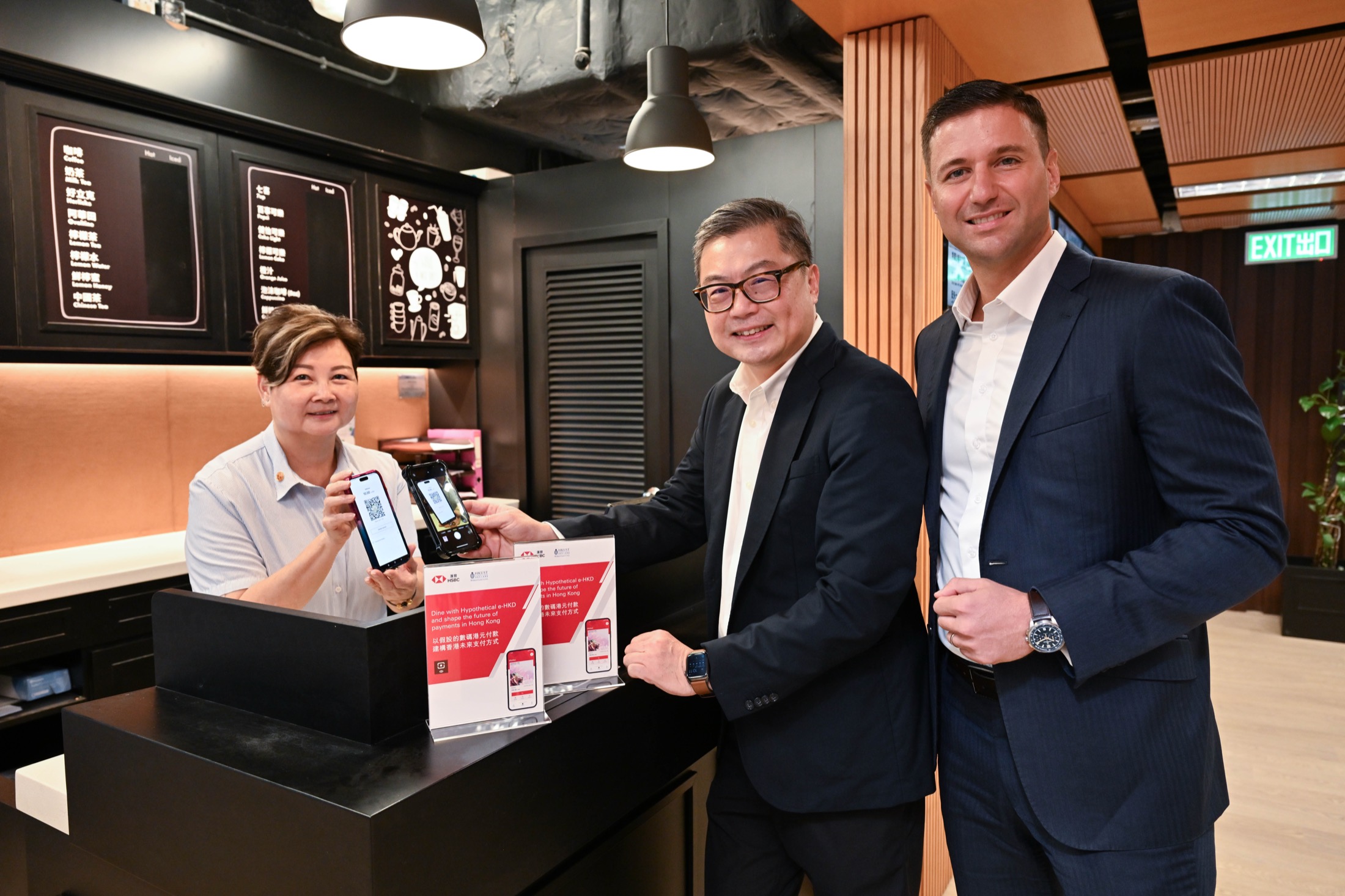
A monetary property became an experience
Programmability was not meaningful as a technical capability alone. My work was to understand how instant settlement, executable conditions and automatic rewards could change an ordinary relationship between a customer, a merchant and an institution. I translated those possibilities into specific campus experiences, deciding where programmability belonged within each scenario and how a person would recognise what the money had done. The future was made tangible through use: a reward released when its condition was met, settlement completed without a separate manual step, and an abstract rule became part of a transaction someone could actually experience.
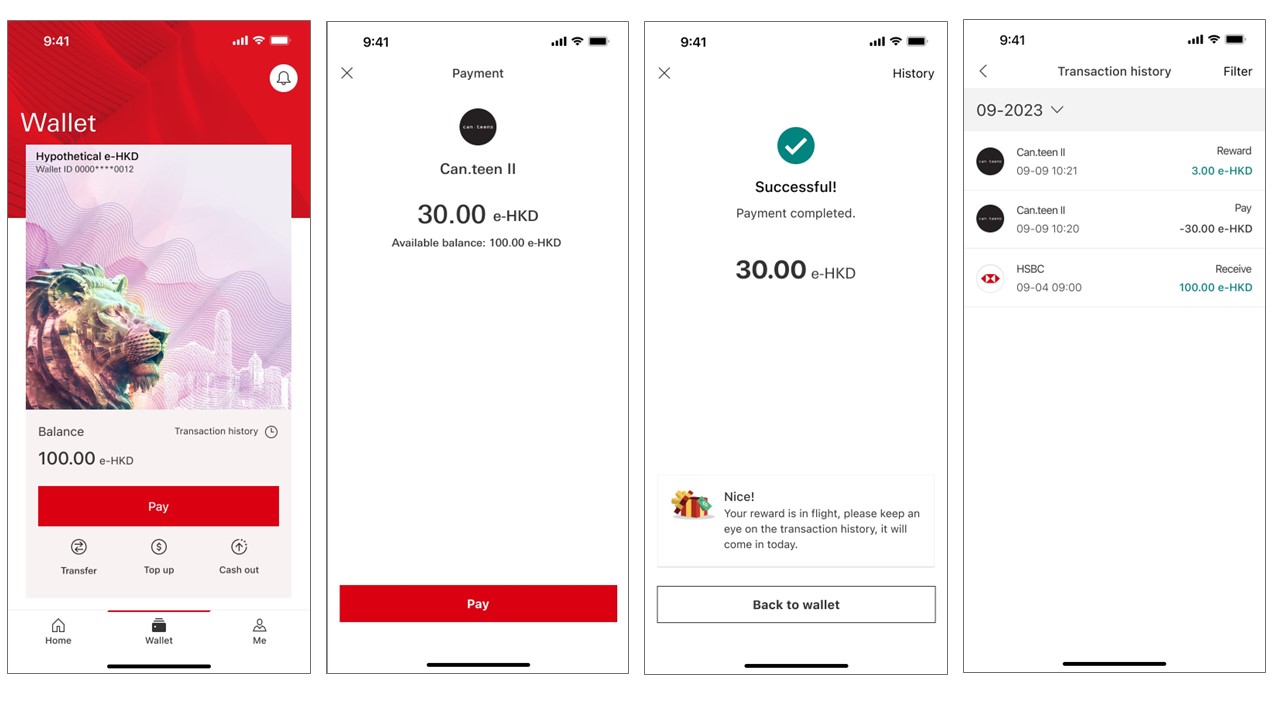
What I designed, and what happened after the pilot
I designed the specific reward and settlement logic each merchant scenario ran on, the customer and merchant journey end to end, and the on-screen representation of programmable money itself, using generative design methods to make an abstract condition, a rule attached to value, visible and legible on screen. I also owned the communication materials and narrative that explained the pilot to participants and stakeholders, and go-to-market support alongside HSBC and HKUST's cross-functional team spanning engineering, legal, risk, regulatory reporting and partnerships. After live testing ended, I carried the work through to how the research was written up. The pilot closed at 148 participants across five campus merchants, documented in HSBC's e-HKD Phase 1 pilot factsheet, concluded as a bounded engagement, not a scaled rollout.