Public programme · Child-friendly healthcare · Shanghai, 2020 to 2023
CHEER
A child can comply with treatment without ever participating in it.
Question carried by the work
When does a child move from being managed to participating in knowledge and decisions?
Follow this question in Field Notes: Care and public systems →Public and institutional assembly
The work is understood through the people, disciplines and forms of participation assembled around care.
A child can comply without participating
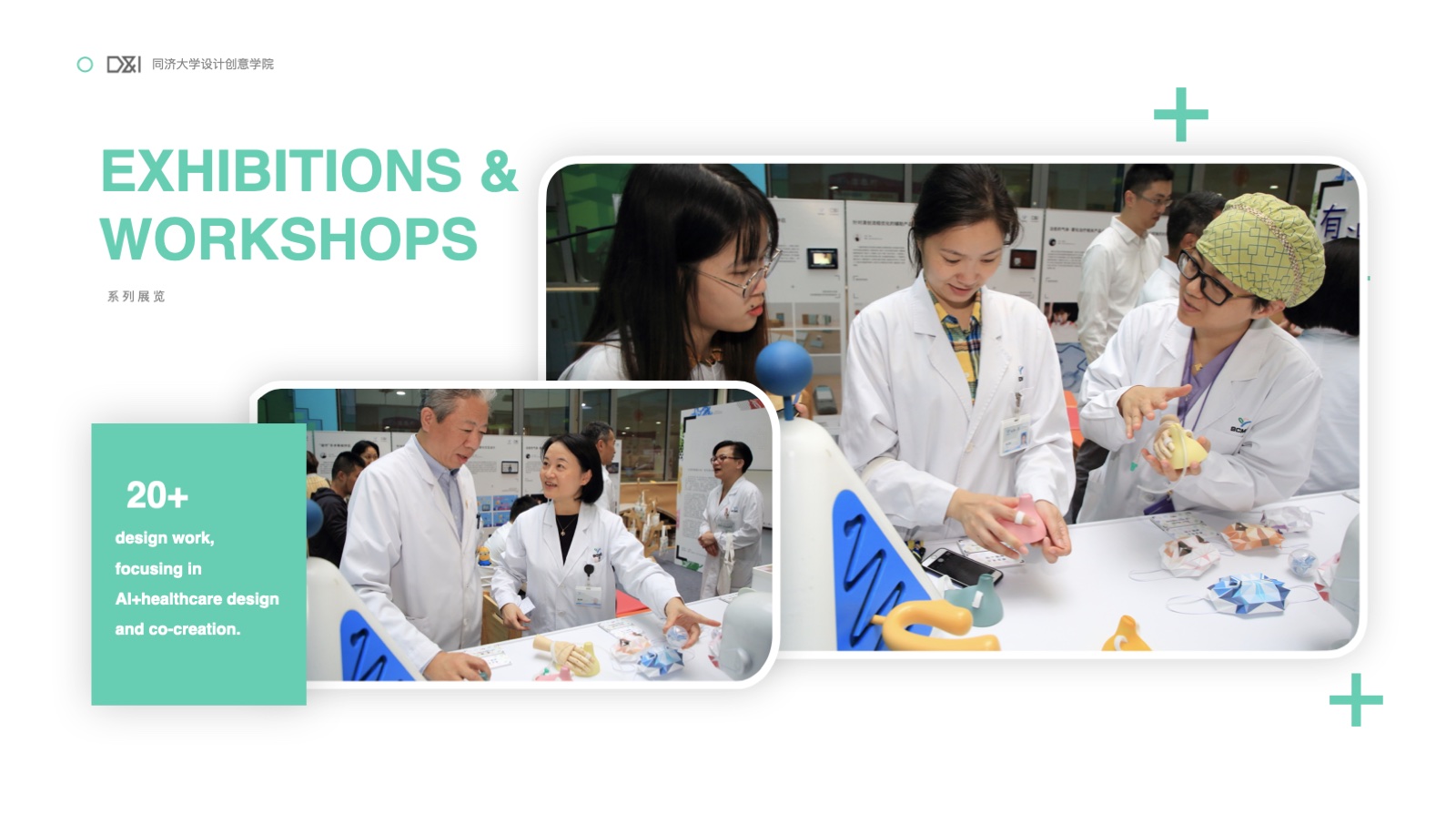
A hospital usually treats a child patient as someone to manage and get compliance from, not someone who understands or takes part in their own care. Tongji University and Shanghai Children's Medical Center wanted something more durable than a single project in response: an innovation lab, a research organisation, a knowledge brand and a community, the first of its kind in China. Leadership held that founding ambition and set the direction. I joined as Founding Expert.
Turning ambition into a working practice
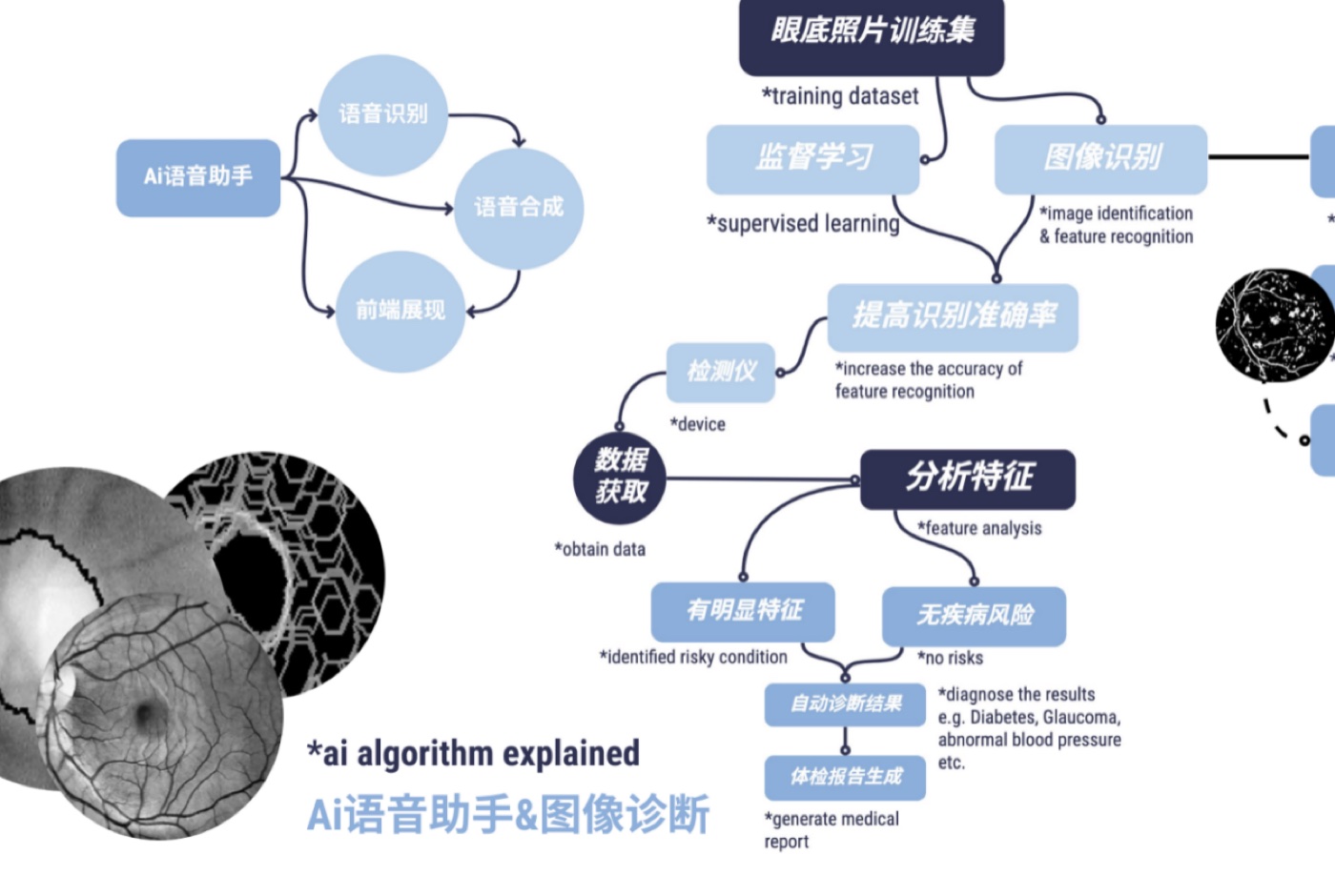
An institution can hold a founding ambition without knowing how to make it real. My contribution was that translation: bringing industry experience the academic side didn't have on its own, to turn a founding direction into an actual interdisciplinary practice, not a mission statement. I helped establish the network across designers, doctors, nurses, researchers, engineers and volunteers, and personally authored research mapping resilient strategy across an intelligent hospital system. This is a recognisable pattern in how I work: institutions are often better at holding ambition than at building the practice underneath it, and that gap is where I tend to land.
What four workstreams produced
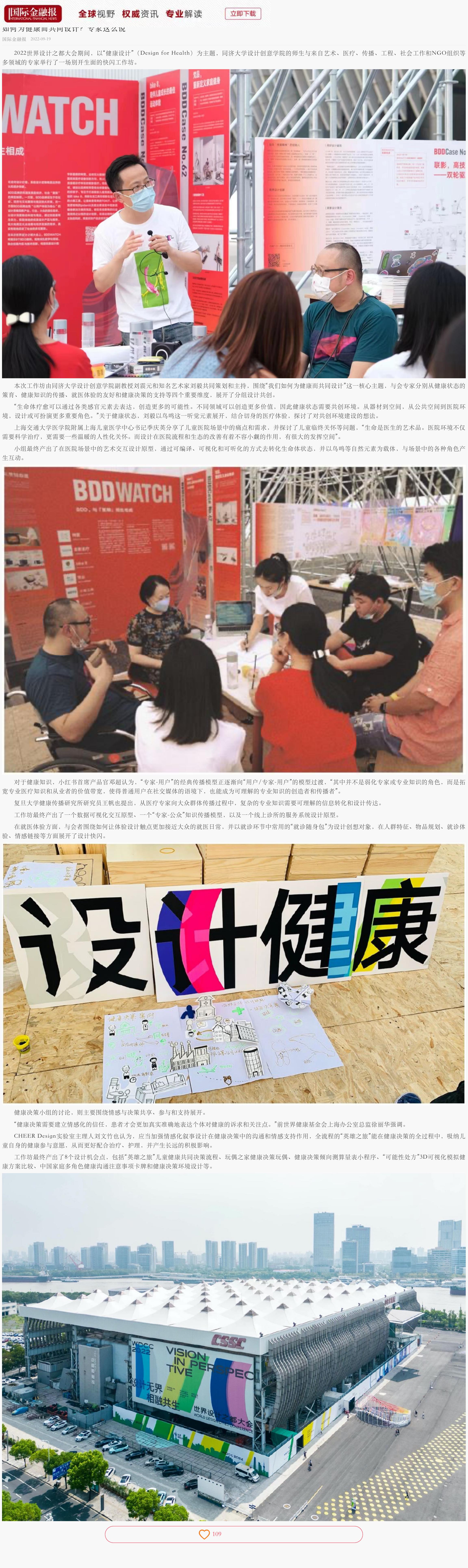
The practice organised around four connected areas, health state, health knowledge, care experience and health decisions, and from them came eight design opportunities: a child-centred decision journey, a preference-assessment mini programme, 3D care-path comparison, family communication cards, decision environments. None of this came from one team. Student coursework, hospital doctors, agencies, doctoral researchers and NGOs each co-created different directions, sometimes with kindergartens and parents involved directly for younger children. The work reached the 2022 World Design Cities Conference and a forum I spoke on directly.
What continues without me
I relocated to Singapore in 2023 and was not closely involved after that point. The practice has continued among the same group of academic collaborators, without me, which is the honest shape of it. What organising the work as an interdisciplinary lab made possible, working on health state, knowledge, experience and decisions as one connected practice instead of four separate initiatives, is the part that outlasted my own involvement, and the part worth keeping.
- What it was
- An interdisciplinary innovation lab and network built around child-friendly healthcare, spanning design, medicine, education, engineering and community organisations.
- Why it mattered
- Hospitals usually treat a child as a compliance problem, not a participant. CHEER organised a whole cross-disciplinary practice, not a single product, around helping children understand and take part in their own care.
- My role
- Founding Expert.
- Year, place
- 2022, Shanghai.
- Status
- An ongoing practice among the same group of academic collaborators. My own active involvement was concentrated around the founding period, before I relocated to Singapore in 2023.
- Strongest proof point
- Four workstreams, eight design opportunities, participation in the 2022 World Design Cities Conference, and research I authored myself.