Public programme · Future mobility · Shanghai, 2021
Mobile Theatre
A vehicle is not only a technical object.
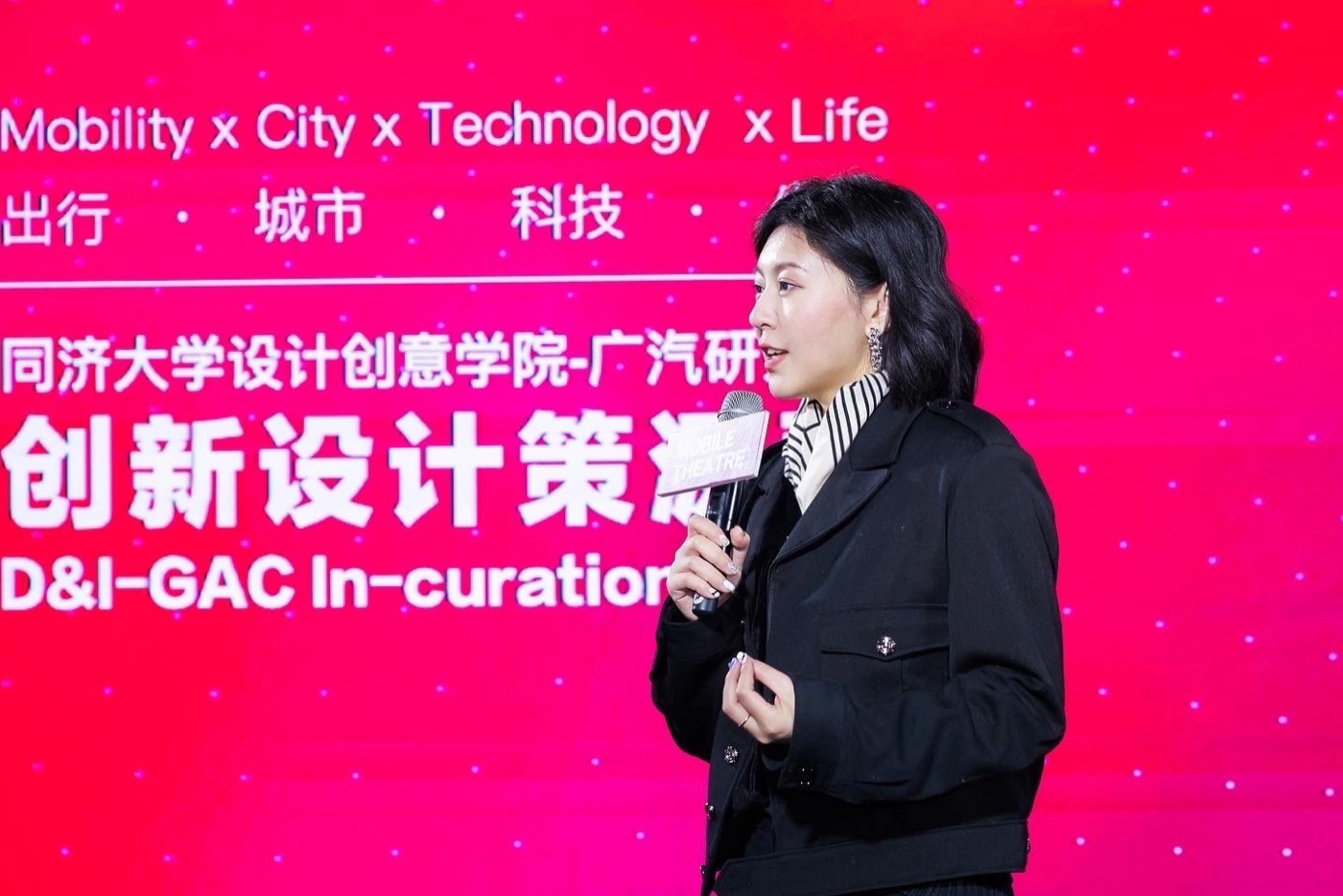
Question carried by the work
How can public discussion shape technological imagination, rather than only comment after technology is complete?
Follow this question in Field Notes: Care and public systems →Public and institutional assembly
The work is understood as a field organised for positions, demonstrators and public technological imagination.
A vehicle is not only a technical object
Future-mobility work is usually asked to predict what the next vehicle will look like, which tends to produce concept cars and moodboards nobody can argue with. Tongji University's Future Mobility Lab and Guangzhou Automobile Co. wanted a programme that could incubate genuine positions instead, tested by argument rather than accepted as a rendering. I joined as Forum Chair and Industry Mentor. The premise itself, reject prediction, demand argument, was formed together with the supervising teacher, not handed to me and not mine alone.
How raw research became a position you could stand behind
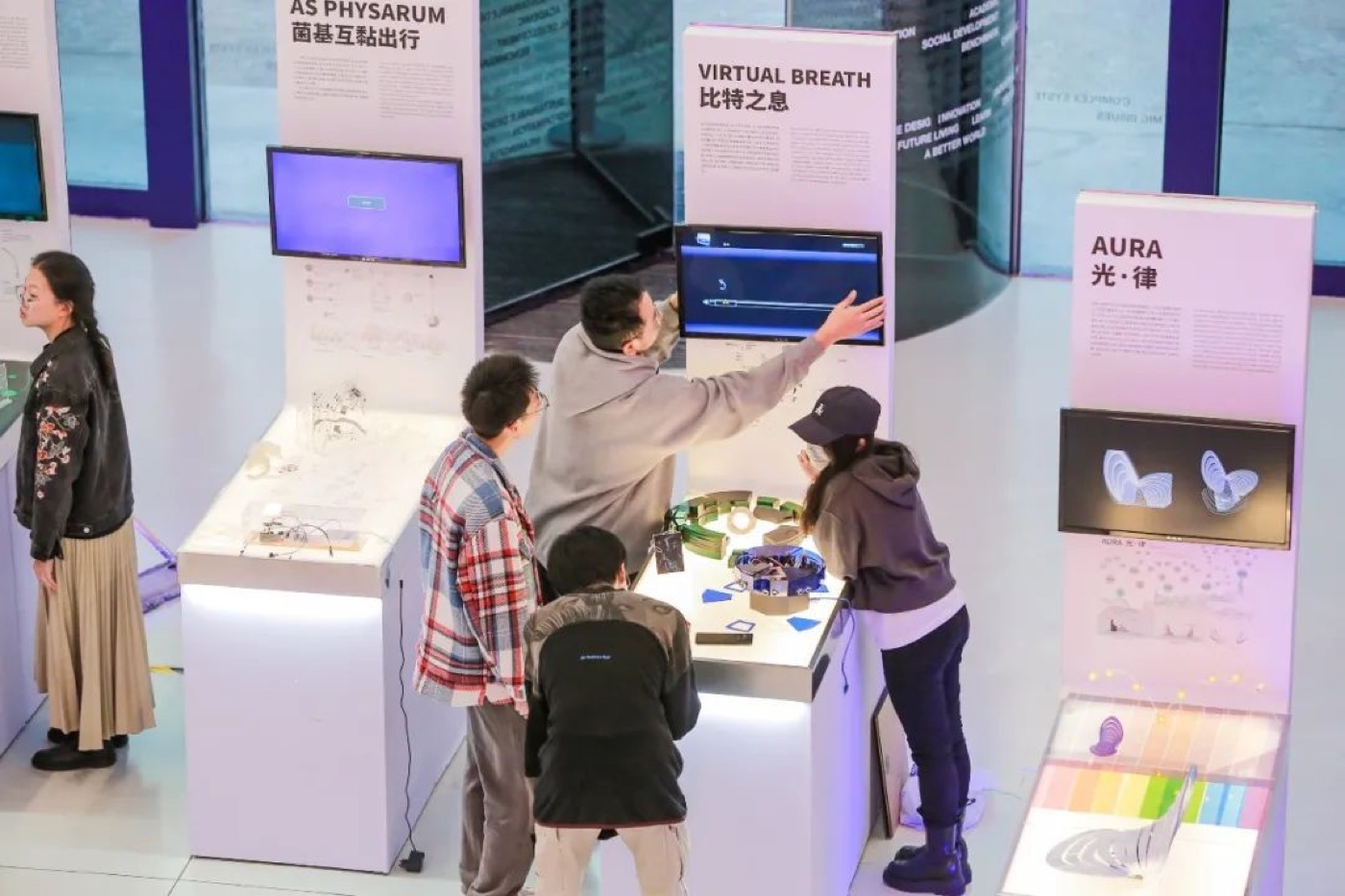
Teams spent roughly eight weeks in close technical and cultural research before a course defence with industry evaluators. I entered at the mentoring phase: claiming specific teams and pressure-testing their research into an arguable position, using systemic worldview and manifesto methods rather than conventional concept development. Positions became physical or systemic artefacts, a quiet giant vehicle exploring electric mobility's missing signs of life, an auditory-travel concept treating sound as the language of autonomous driving, kept unattributed to individual teams on the public record. A further round of coaching prepared them for public staging.
What the public saw
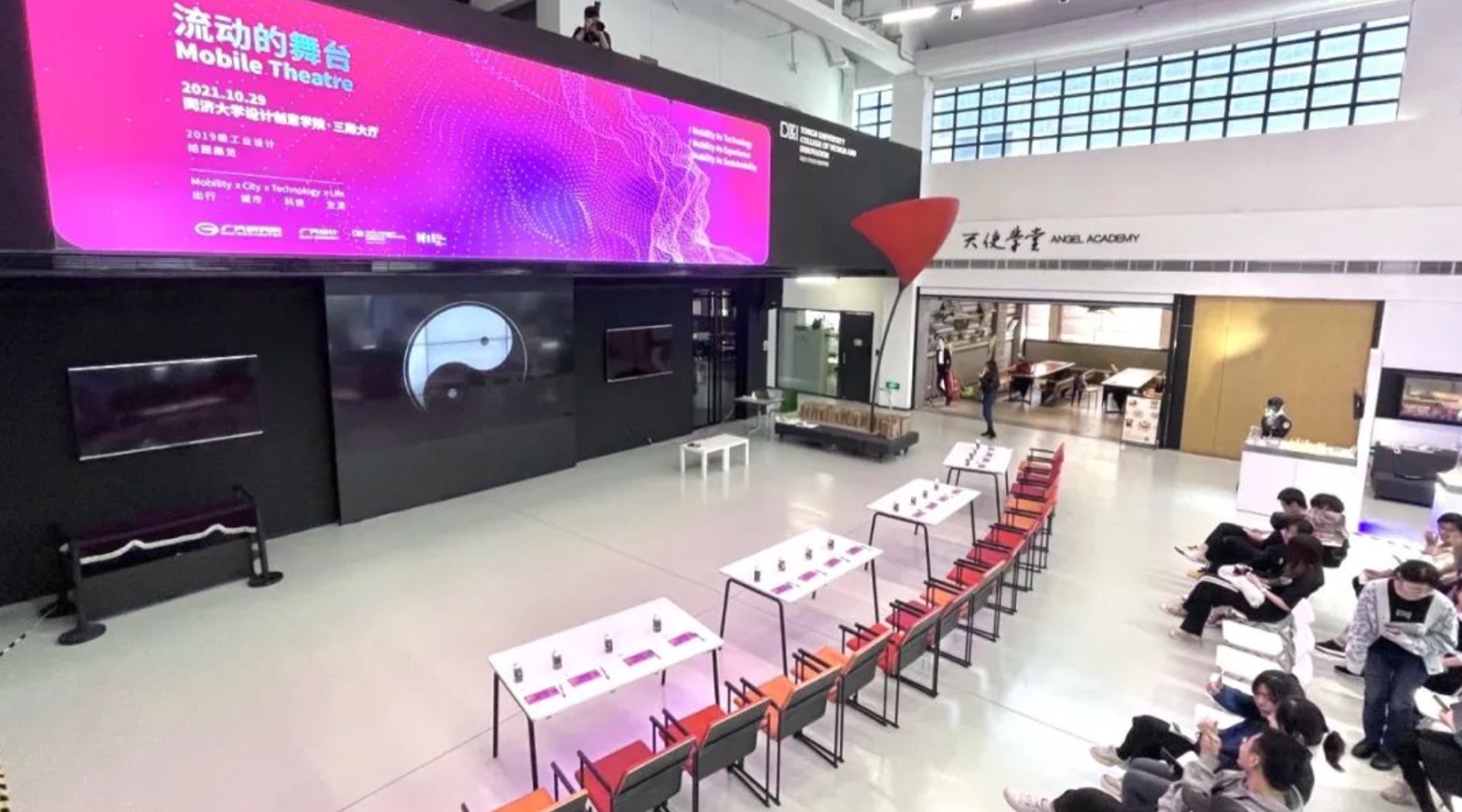
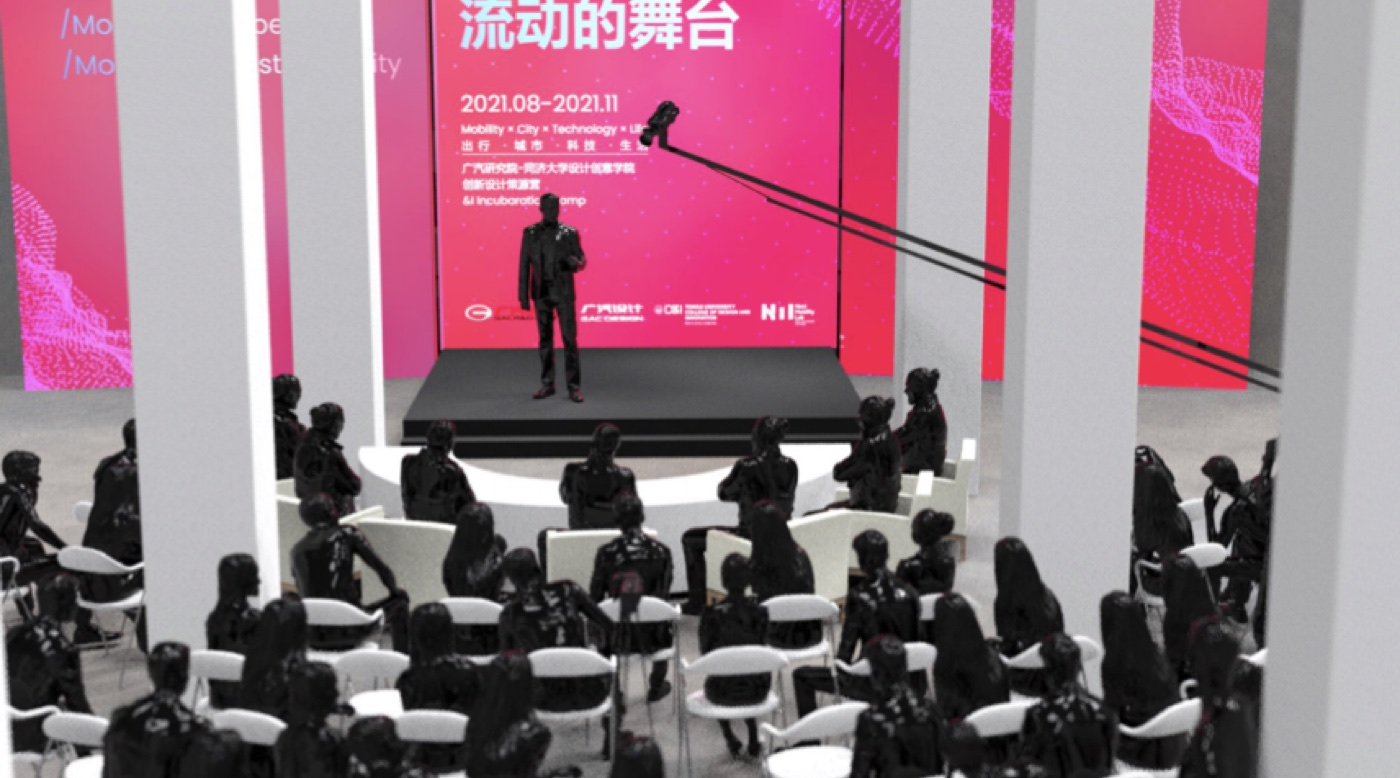
Eight team propositions became a public roadshow across three perspectives, technology, experience and sustainability, paired with a forum of ten speakers and more than thirty industry guests, structured as dialogue between student rhetoric and industry expertise rather than lecture. The livestream peaked above three thousand online. The programme ran three months in total, part of Pan-Tongji Design Week and Shanghai Design Week, and concluded as a complete engagement. Running it without a predefined problem or outcome, a direction shaped together with the supervising teacher, was the strategic move itself: it is what let genuinely different positions surface instead of converging on one expected answer.
- What it was
- An innovation-curation programme asking students and industry experts to argue for future mobility, not predict the next vehicle.
- Why it mattered
- Most future-mobility work treats the vehicle as a fixed object. This programme opened the question to technology, sound, materials, energy, data and urban culture at once, then forced those arguments into public view.
- My role
- Forum Chair and Industry Mentor.
- Year, duration, place
- 2021, three months, Shanghai, part of Pan-Tongji Design Week and Shanghai Design Week.
- Status
- Complete programme.
- Strongest proof point
- Eight team propositions reached a public roadshow and forum with ten speakers, more than thirty industry guests and a peak online audience above 3,000.