Ongoing community practice · Wardrobe gathering · Singapore, 2026
Too Hot to Wear
An object is easier to release once its former life is acknowledged.
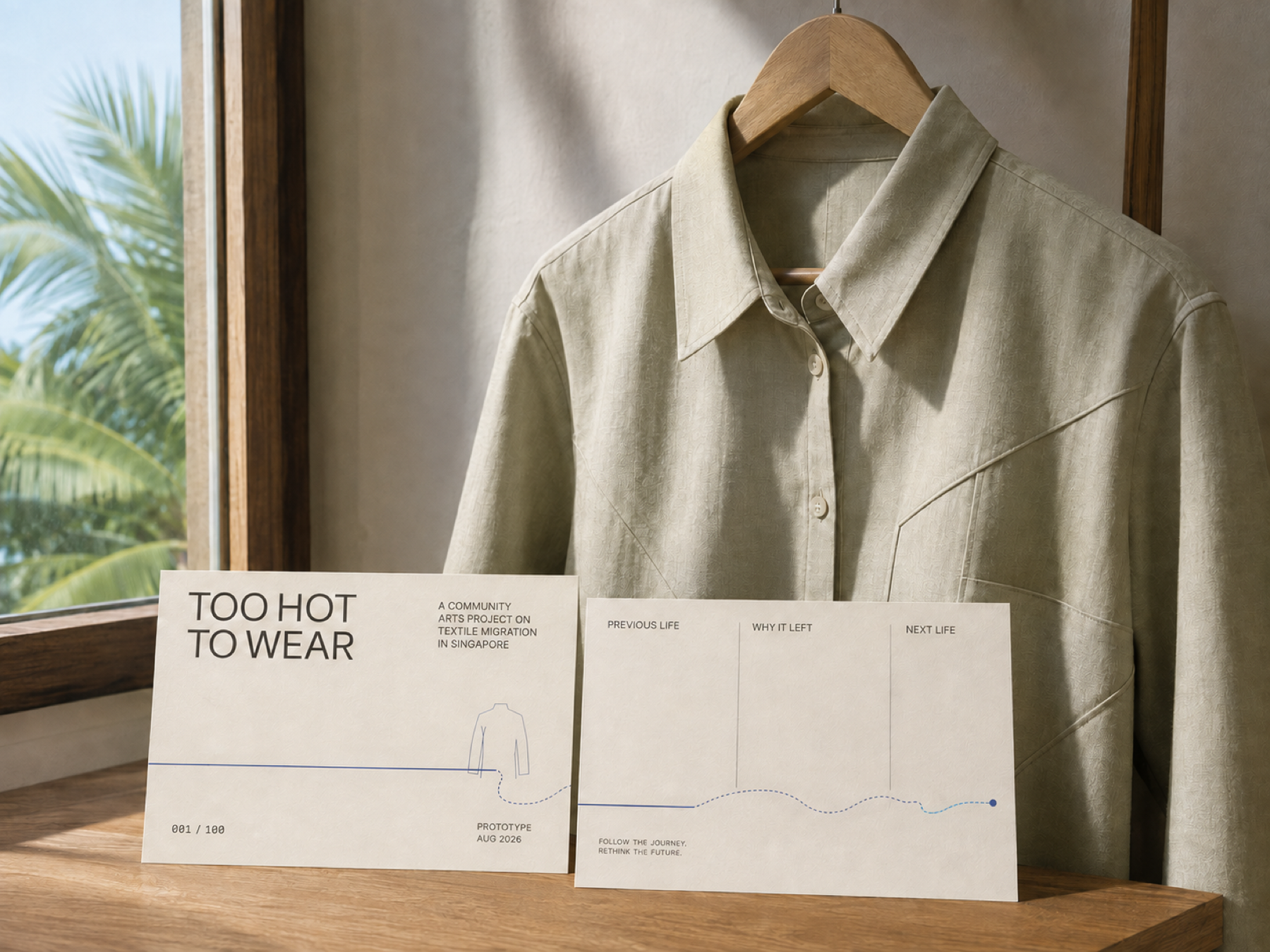
Question carried by the work
Once an object’s past is acknowledged, can it enter its next relationship more easily?
Follow this question in Field Notes: Culture, objects and portable life →Material and participatory practice
The narrative begins with an object caught between lives, then builds a social form through which its history and future can meet.
An object is easier to release once its former life is acknowledged
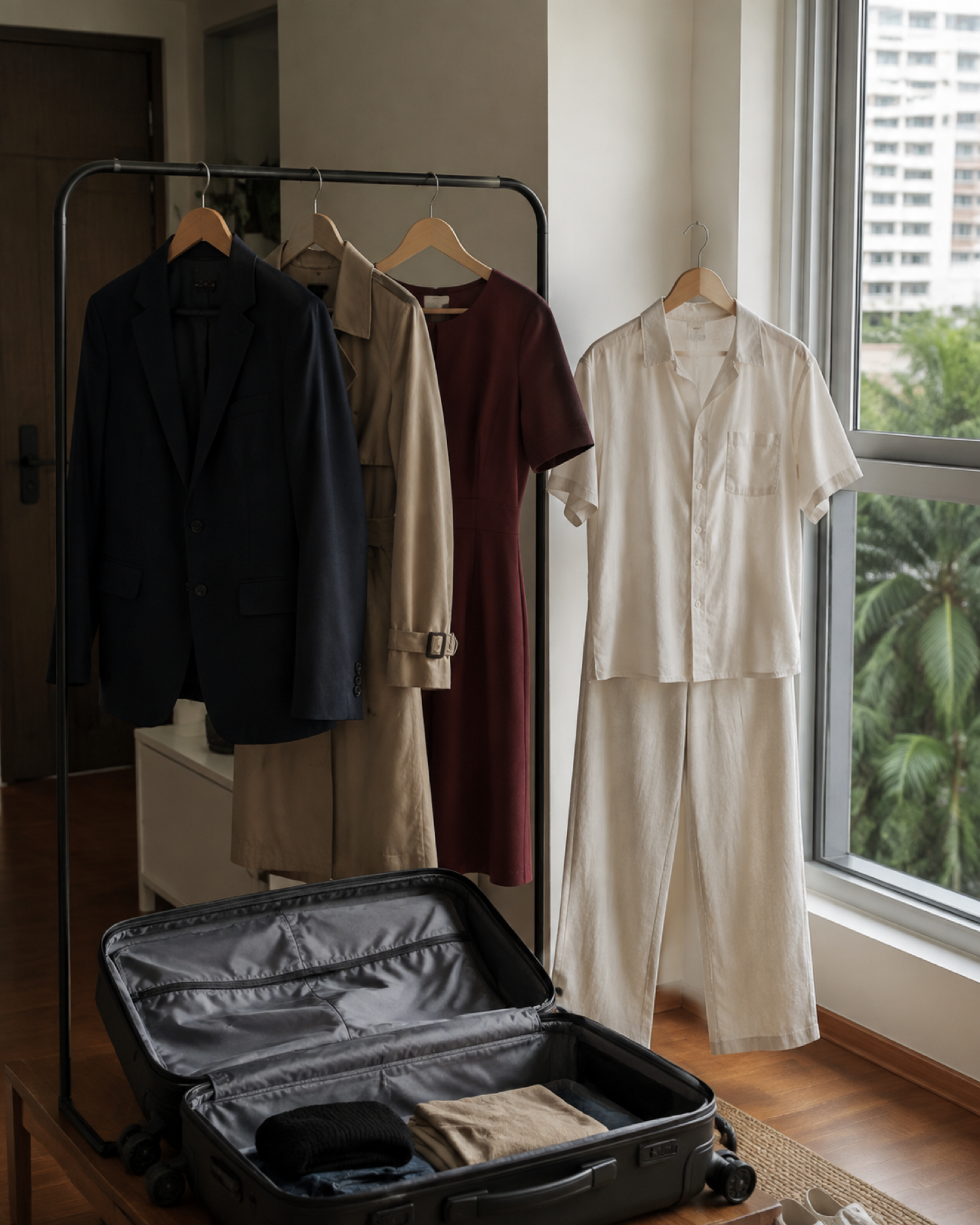
A jacket unbearable outdoors but useful only under aggressive air-conditioning. Office clothes that outlast the job that required them. Garments packed for a life that got imagined but never actually happened. Too Hot to Wear turns these private, slightly absurd mismatches into a small wardrobe gathering, not a resale market and not a sustainability campaign, a lightweight community practice built around story and voluntary exchange. As Initiator and Host, I designed the format to test one specific idea: that letting go of an object gets easier once its former life is spoken out loud, not quietly discarded.
- What it is
- A small wardrobe exchange gathering that turns a private mismatch, a garment that no longer fits the climate, the job or the life it was packed for, into shared story and exchange.
- Why it matters
- Migration and Singapore's climate strand ordinary clothes constantly. The gathering tests whether releasing an object gets easier once its former life is acknowledged.
- My role
- Initiator and Host.
- Place
- Singapore.
- Status
- Ongoing community practice. Research, outreach and the complete gathering format are in place, and funding has been applied for.
- Strongest proof point
- 4 people expressed interest within the first hour of a public invitation, a complete 8-participant gathering format, and a funding application.
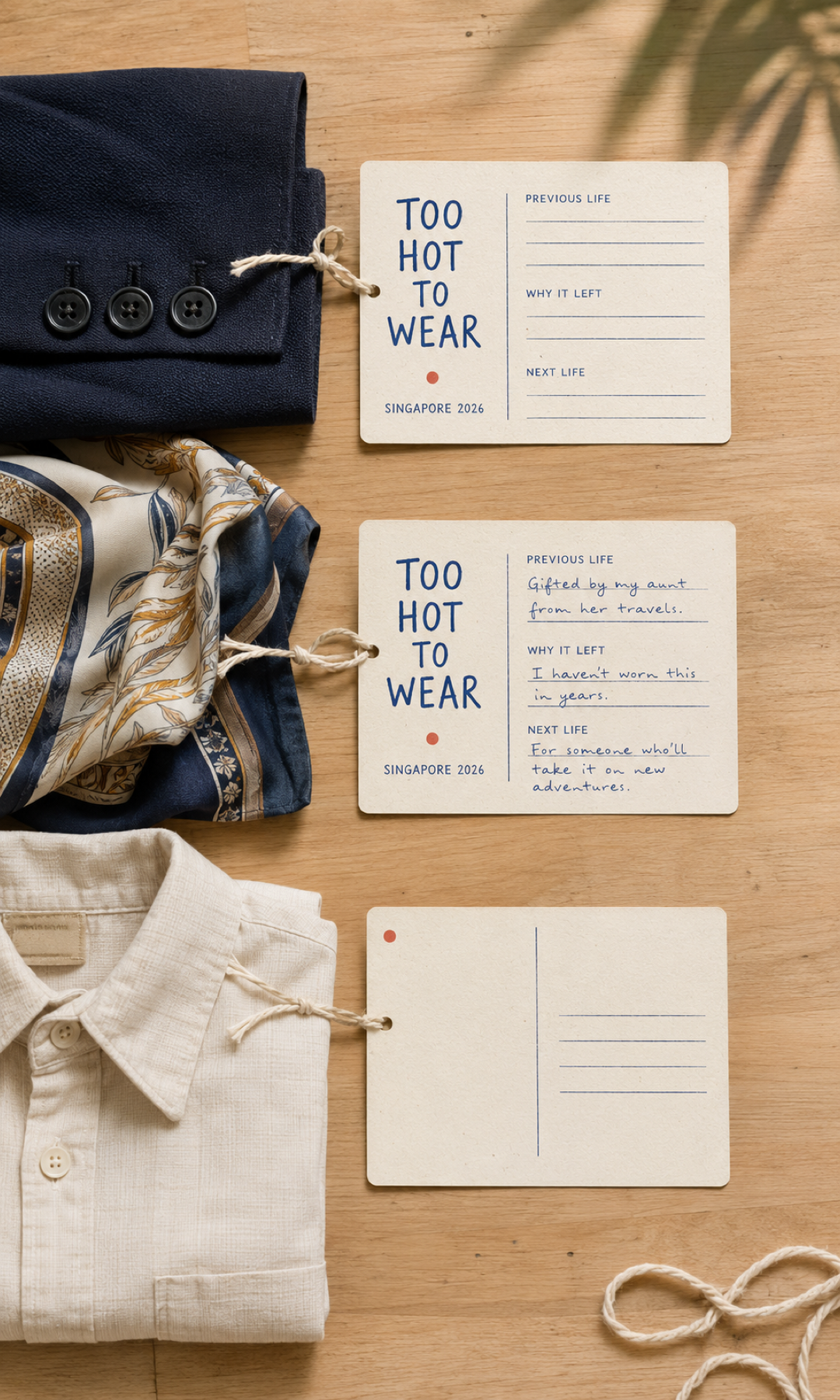
Eight people, one to three garments, a postcard that travels with each piece
The gathering is designed for eight participants, each bringing one to three clean, wearable pieces. Everyone shares where a piece came from and why it left their wardrobe, then exchange happens freely; anything unchosen goes home with its original owner rather than being pushed into circulation. Each exchanged garment carries a Wardrobe Postcard, and with participant consent, these become a small digital postcard series afterward, letting a garment's story stay partly visible even after it changes hands. Four people expressed interest within the first hour of a public invitation, before any formal outreach began.
From a personal observation to an organised community format
Research, outreach, the gathering format and the Wardrobe Postcard system are complete, and I have applied for funding to support the work. Together they turn a personal observation into an organised, repeatable community format: eight people, a clear exchange protocol, a story attached to each garment and a consent-based way to document what travels onward. The practice continues through participant conversations, hosting preparation and the public invitation to see clothing as lived evidence rather than surplus inventory.